Slow Cooker Pot Roast
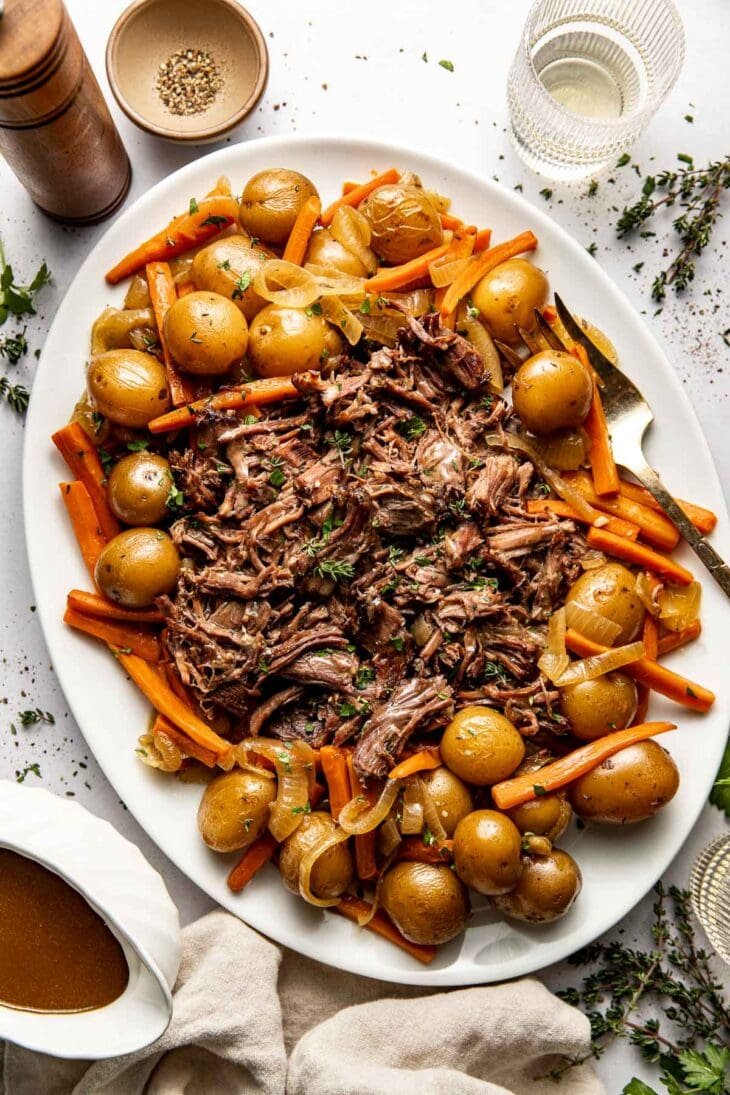
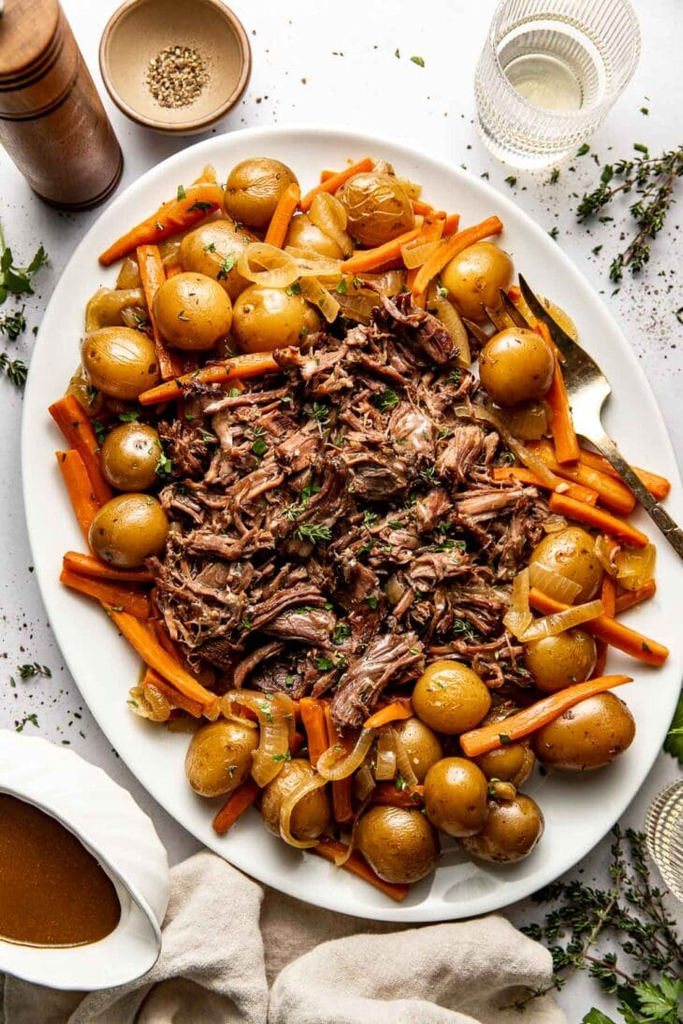
I have a household full of hungry boys (four of them, plus my husband), so hearty crockpot dinners are something I add to my weekly meal plan all the time. This beef pot roast has quickly become a family favorite, especially in the winter when the weather is cold. In fact, I’d go so far as to say it’s the best pot roast I’ve ever tasted. And, unlike traditional roasts that require hours on the stove, my version cooks long and slow in the crockpot. That means I can just toss all the ingredients together in the morning and then have a delicious, savory meal with ease.
Recipe Highlights
I’m not the only one who loves this recipe. My husband and boys rave every time I make it, too, scooping up every last drop of the gravy from their plates. Here are a few reasons why I think it’s so good:
- The slow cooking time makes the roast unbelievably tender! I use chuck roast (you can also use rump roast or bottom round roast) which benefits from the long cooking time to break down the collagen and proteins into pull-part, melt-your-mouth perfection with each bite
- I love that I can quickly prepare the ingredients in the morning, taking just a few minutes of prep time to sear the meat and chop the veggies. Then, I can let the crockpot do all the rest while I go on with my day
- Made with beef chuck roast, potatoes, and fork-tender veggies, this recipe is truly a complete meal in one, including several different food groups and most essential nutrients I need
- One roast makes more than enough to feed my family, and leftovers keep well, making it really good recipe option for meal prep
- Personally, I aim to get a minimum of 75 grams of protein per day, and this recipe makes it easy to hit my goals thanks to the beef, a high-quality source of amino acids
Health Benefits
The use of beef roast makes this crockpot pot roast an excellent source of quality protein, B vitamins, and iron. The veggies add fiber, vitamins, minerals, such as vitamin C, vitamin A, and vitamin B6. And the beef and olive oil (or avocado oil) chip in to provide good-for-me fats that make it easier for my body to absorb the fat-soluble vitamins. This all means I’m getting a great nutrition bang for my buck, here.
When I want all that good-for-me nutrition in a convenient meal but want to spice things up just a bit, I’ll put a Mississippi pot roast in my slow cooker instead. Or if it’s March I’ll make a classic corned beef and cabbage dinner.

Ingredient Highlight: Beef Chuck Roast
Not only is chuck roast typically a more affordable cut of meat, but it’s also a great source of protein and iron. For instance, around 3 ounces of beef chuck roast provides 22 grams of protein per 3 ounces and nearly half the recommended daily intake for iron. Chuck roast is also a good source of minerals, including calcium, magnesium, phosphorus, and potassium.
For the best results, I recommend looking for high-quality red meat that is grass-fed. For chuck roast in particular, I always try to look for cuts that are fairly uniform in size with nice marbling throughout. The marbling in the meat is fat that melts down as it cooks, making the roast juicy, flavorful, and pull-apart tender.
Tip!
Make Your Own Broth
Sometimes I make homemade bone broth, and our Instant Pot recipe makes it so easy to do so. I also find that homemade broth adds more depth of flavor and collagen versus store-bought broth. Plus, it helps ensure that nothing goes to waste in my kitchen, since I make it from vegetable peels and scraps, and leftover meat bones.

How To Serve
I sometimes serve this recipe on its own, finding it plenty filling as it provides protein, carbohydrates, fats, and fiber. However, when we’ve eaten all of the potatoes and carrots, and I just have some of the beef and gravy leftover, I’ll pair it with our Instant Pot jasmine rice, Instant Pot brown rice, or Instant Pot mashed potatoes.
To add some green to the plate, I might make some sautéed asparagus, green beans, or air fryer Brussels sprouts.
How To Store
Personally, I think this crock pot roast recipe tastes even better the next day once the flavors really have time to sink in. I store leftovers in a covered airtight container in the refrigerator for up to 4 days. I always store the cooked gravy in a separate container and reheat it on the stovetop (although you could heat it in the microwave if you’re in a hurry).

To freeze, store the cooked beef and gravy together (without the vegetables) in a freezer-safe container or heavy-duty bag for up to 3 months. I don’t recommend freezing the veggies as they tend to become a bit mushy. Thaw the frozen meat and gravy in the fridge overnight, and then reheat it in the microwave or in a pot on the stovetop over low heat.